
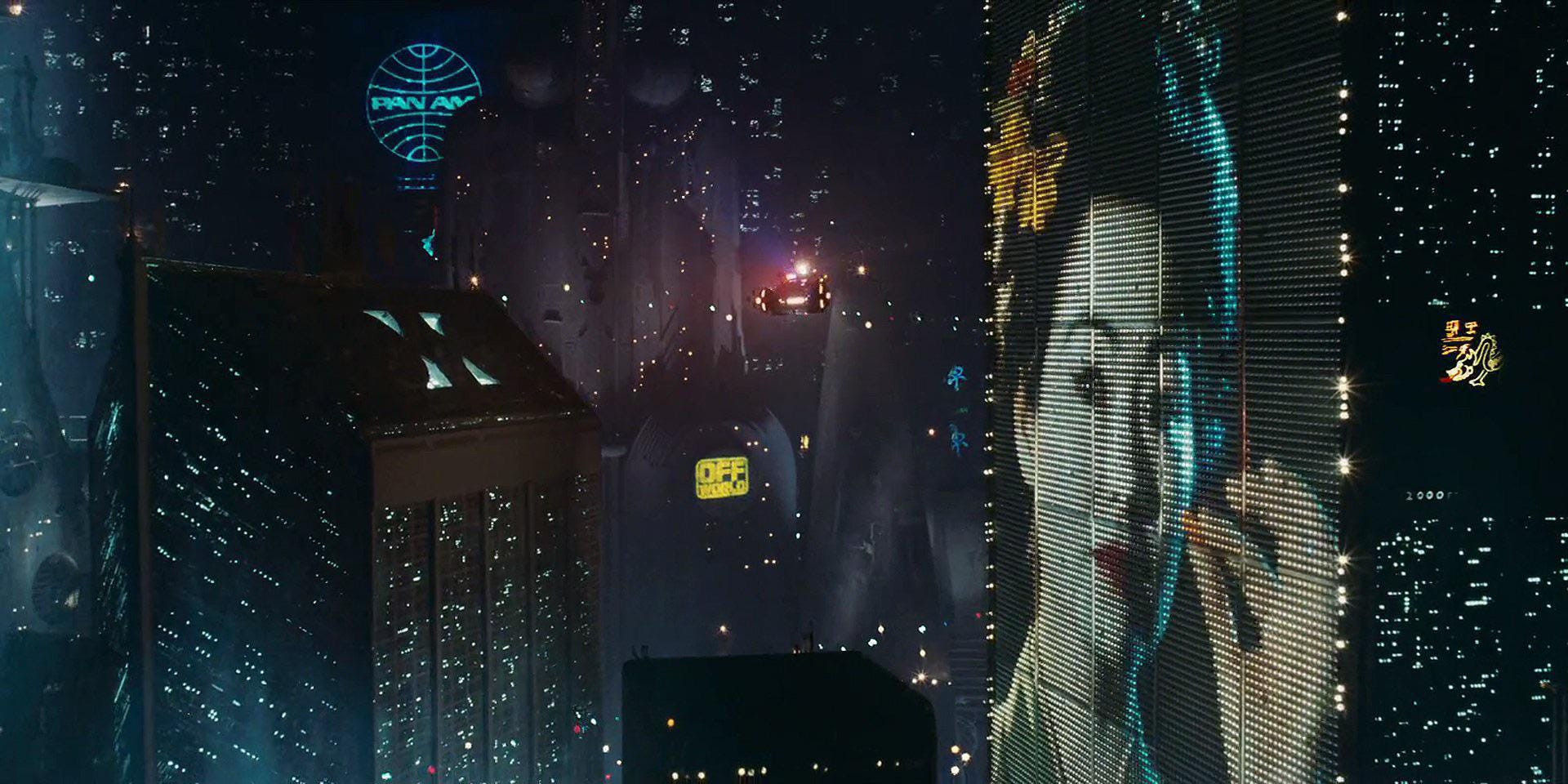
We're headed for the Blade Runner universe
About why I'm insulted by AI generated "writing".

Conjure this: Kyoto, September 2016. Milling around the narrow streets of Gion, cameras at the ready, we are hoping to spot a Geisha. We’re not the only ones. Every tourist (local and foreign) around the corner of every teahouse, hopes for the same. The evening is grey. The settling darkness rapidly reminds us we are cold; the cold rapidly reminds us we are hungry. And as the wooden townhouses begin to turn on their lights and lanterns, the streets grow empty. Then, just as we’re about to call it a day, there she is: quick as a gasp. Teetering on 9-inch geta to her appointment, with her bundle. A blaze of colour in the monochrome. We freeze, rooted to the cobbles. Our cameras forgotten. And as she disappears around a corner, the Japanese guy next to me exclaims with awe: ‘Geiiishaaaa.’
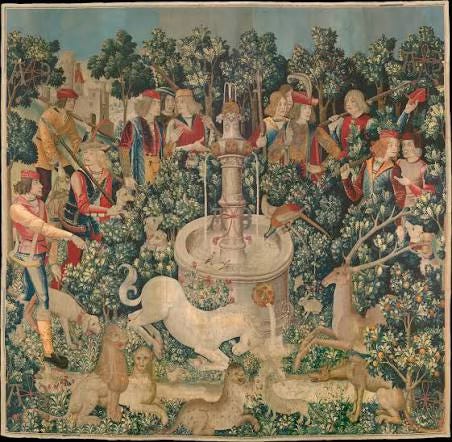
It’s the way he said it. Like he’d seen a unicorn.
Why am I telling you this? Because Substack now has a built in Pangram AI scanner. Because we’ve found ourselves in a world where you can no longer trust art. Once upon a time, I was an editor who tutted superiorly at grammatical errors. Now, I get excited by them; the same way I do when I spot wonky, mite-bitten tomatoes at the Saturday Pazar. Wonky and mite-bitten is a sure sign they were not manufactured. That someone locally tackled the (unreliable) elements and the leeches and grew them in their garden.
Here’s a confession: It took me four months to finish writing this blog (brain fog, workload, inhibition – pick your poison). I nearly gave up all together. Because who am I to try and change the way the world is going to the dogs? But then shit got personal.
It is a dark day when a published author stoops to AI to write an article. Darker still if the author is someone you know. Do you confront them? Of course not. It’d be embarrassing. It’d be like asking if they farted, when you’re both sat in a car, and it smells funny, and you know you’ve still got your wudu.
Next thing I know, the incident isn’t even isolated (writing with AI, not farting). Suddenly, AI written or ‘polished’ writing is landing in my social media feed left right and centre. Most of them are featured in those familiar digital magazines and platforms targeted at Muslim audiences. And then the insult to indignity: the cyber equivalent of being told to shove off by an “author-Qur’an-psychology-health” personality (what I call “content creators”) on Instagram. The context: I humbly flagged an error in one of said creator’s AI generated posts.
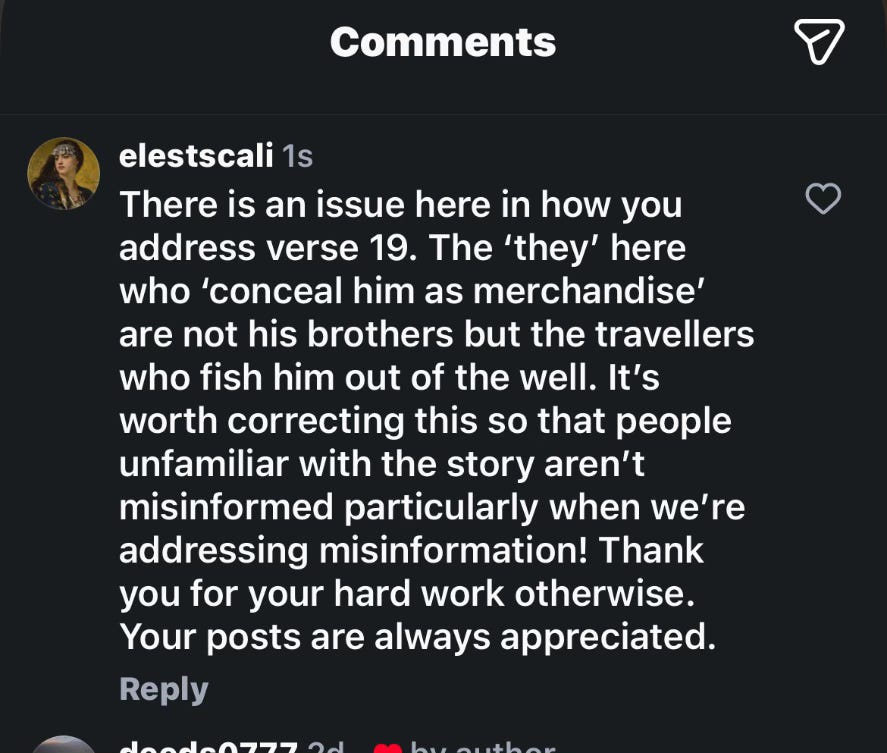
Aren’t they awful, those snide critics on the sidelines? It’s worse than awful when you have to be one. But the error was at odds with the narrative in the Qur’an. Someone had to say something to get it corrected, or the post deleted. How very naïve of me.
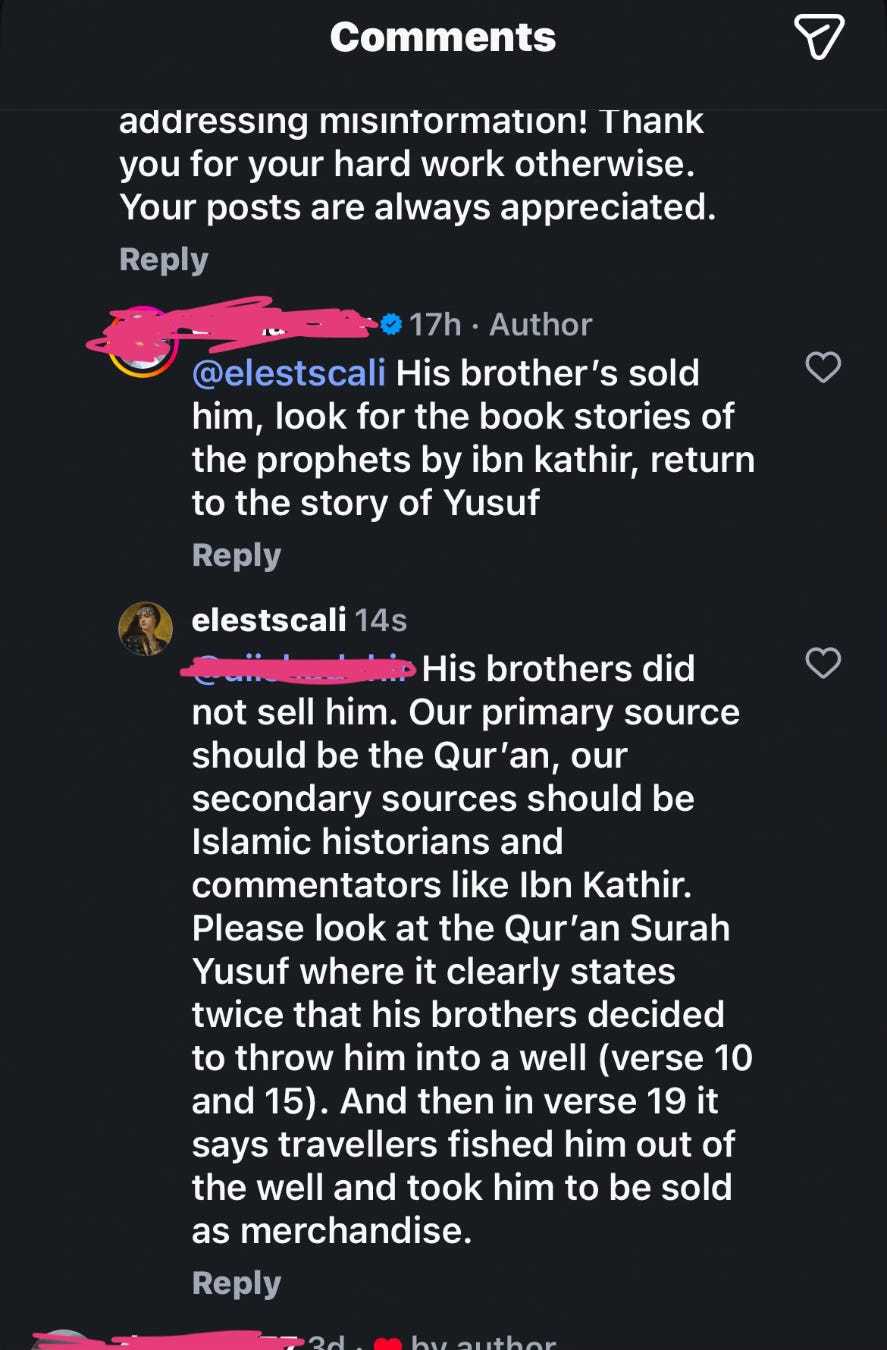
Several months on, the post and the error remain. 19k likes galore. Do you know what did get deleted? My comment thread. I suppose our content creator couldn’t afford to lose all those likes. Or he/she just didn’t have the time. There was more content to churn out. An algorithm to appease. Traction to maintain. Content creation is a business not a public service. And now too many Muslim writers/creators/platforms are using AI to boost their output.
Let’s put that into context. While the Pope issues the equivalent of fatwas against this technology, which is neither infallible nor benign (and is guzzling our water), we’ve hurled headfirst into its business of deceit with the irresponsible zeal of an uncle who got his hands on the latest, shiny gadget. Does this say something about us as a community? About our penchant for cutting corners? Or about a lingering insecurity of the colonised which has us still believing the boons of Western modernity and materialism will save the world…? Who knows.
Back to Gion now, in case you’re still wondering why the Geisha metaphor. In hindsight, she didn’t tick any boxes, that Geisha, by conventional beauty standards. She was petite, with short limbs. Her forehead was much too narrow to carry off the magnificent hairdo. And her features were plain. But she was beautiful to us, the way that rare and transient things are. It was a beauty refined out of quiet effort and training and suffering and dedication and vulnerability. The byproduct of a life in the earnest pursuit of art for art’s sake and perfection that can never be achieved. Because we are human.
The Geisha reminded me of why I write and why I read. I write for human expression. I read for human connection; with all its flaws and poor turn of phrases which are testament to human turmoil. I read to feel part of the great, big human struggle. To know I am not alone in it.
By comparison, the soulless symmetry of AI is excluding. It impresses without leaving a meaningful impression. It informs, and yet my mind seldom retains the information it’s providing. I’m convinced that its bite-sized bullet-point treatises are not only designed to make me feel dumb, they are actually making me dumb. When I encounter it, I am possessed with the irrational urge to look away to save my soul.
That’s why I am so insulted when a “writer” uses AI. Because it speaks volumes about intention. If art and human expression isn’t the intention here, then what is? Advertisement? Deception? Fame? Followers?
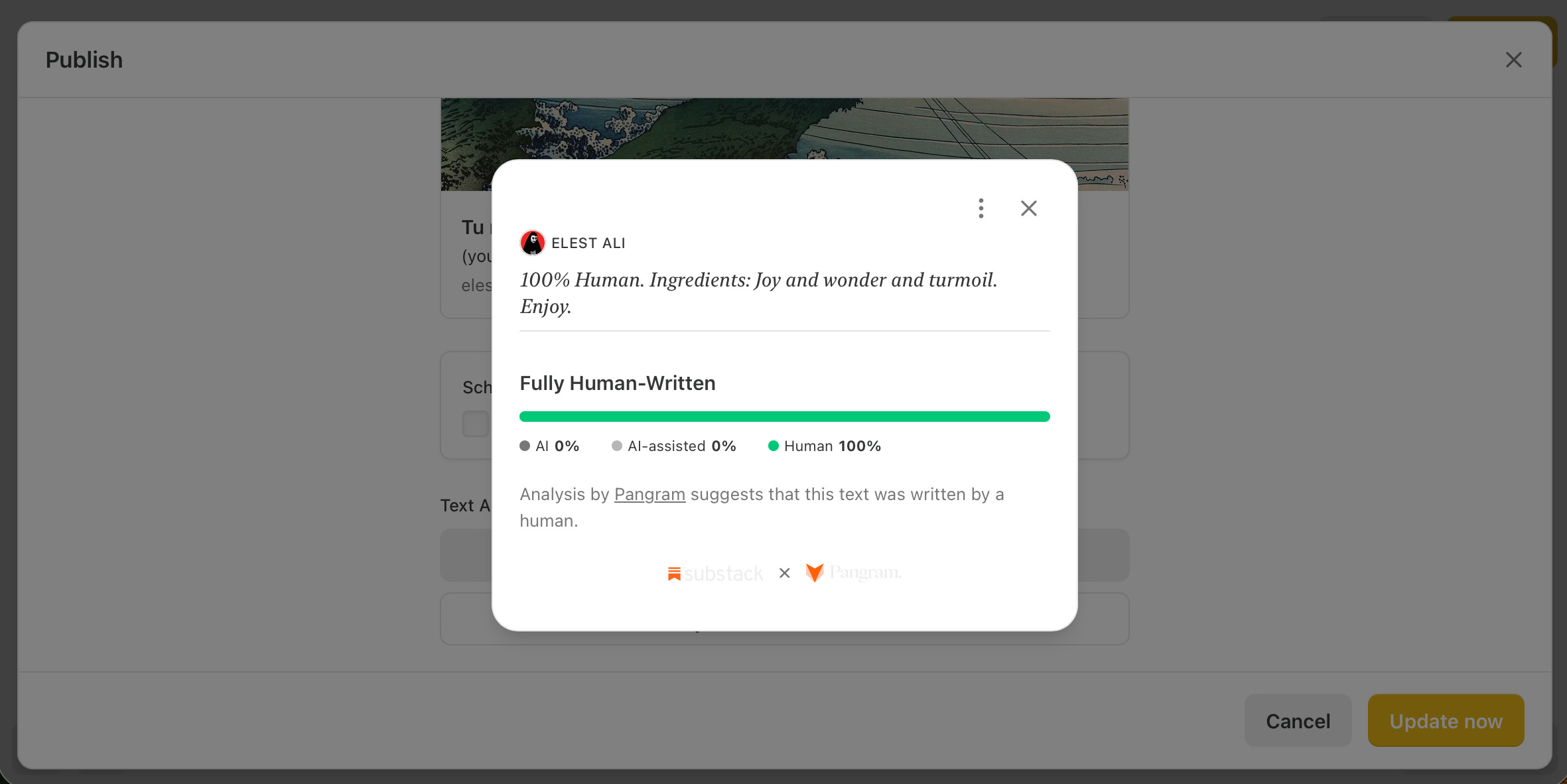
More than AI itself, I’m disturbed by what AI represents: an untruth, or worse, a half-truth made of theft. It is a reflection of our greed for gratification and achievement without the effort, without the thought, the patience, the messy bits, the flaws, the vulnerability. Because apparently lots of people want to be writers and artists and famous without the quiet suffering that goes along with it.
Is AI even at fault then? Or is it just made in our own image (?) as we’ve redesigned ourselves by the laws of algorithms for maximum output, maximum followers, maximum likes. Our creativity is modulated and monetised. Our thoughts/commentary dispensed regularly and in response to current affairs, so that we may maintain relevance. Our images are filtered and photoshopped to achieve a repelling perfection. We are products of our own making with AI as the footman.
I’m going to get film nerdy now so if you aren’t into sci-fi you can stop reading – I’ve made my point anyway. But the next bit is relevant, because I’m convinced we’re headed for the Blade Runner universe.
My first memory of that film was from when I was four. It was autumn in Vienna, 1987. Yours truly was sat between a pair of hippy parents who didn’t understand the value of age-ratings. We were watching Ridley Scott’s Blade Runner (1984) on VHS tape. And the “villain”, Roy Batty, had just smashed his head through bathroom tiles and was running at Harrison Ford’s Rick Deckard with a white dove.
Terrifying. But this, and the Geisha in Gion, are two out of a billion-billion personal experiences that inform how I see and derive meaning. Both helped in the formulation of ideas that went into writing this article, organically through the settling of random sediments, over time.
AI cannot replicate that. Instead, it “learns” AKA steals from what humans have already created. It measures the impact those works have had on a given audience. And then it mimics to create a thing designed to achieve a desired emotional/mental response. It is not expressive. It is manipulative.
In case you’ve never seen Blade Runner or need a refresher for the premise, here it is: The Blade Runner universe is set in a dystopian future where AI humanoids (called replicants) and people live side by side. The replicants are essentially slaves or second-class citizens. Bioengineered as superior beings, they are designed for dangerous or menial labour. High-end models (Nexus-7) have implanted memories, to address the emotional instability of earlier (Nexus-6) models designed as adults with a 4-year lifespan. The “villain” Roy Batty is one of those Nexus-6 replicants, who goes rogue, seeking revenge as he faces his imminent death. His desire is for more life, to preserve the memories and emotions he’s accumulated. ‘I’ve seen things,’ he says, ‘you people wouldn’t believe. Attack ships on fire off the shoulder of Orion. I watched C-beams glitter in the dark near the Tannhäuser Gate. […] all those moments will be lost in time. Like tears in the rain.’
Roy, who has lived a life of fear as a slave, yearns to be human. In an unfeeling world, where humanity has all but deteriorated in the service of creating dispensable perfection to profit off of, AI humanoids cling to what mankind has relinquished: feeling, dreaming, experiencing, loving and learning through effort – the building blocks of creation. Not as a means to an end. But as the end itself.
And how does this end? In a world dominated by the artificial, where tourists exclaim ‘humaaaan!’ as they discover the flawed work of an obscure poet who has gone through the motions of creativity? Hopefully. Because an even worst-case scenario would be a society where our faculties of discernment are so blunted that we can no longer distinguish between truth and falsehood. Hell, maybe we won’t even care. And then enter the Dajjal, stage left.